
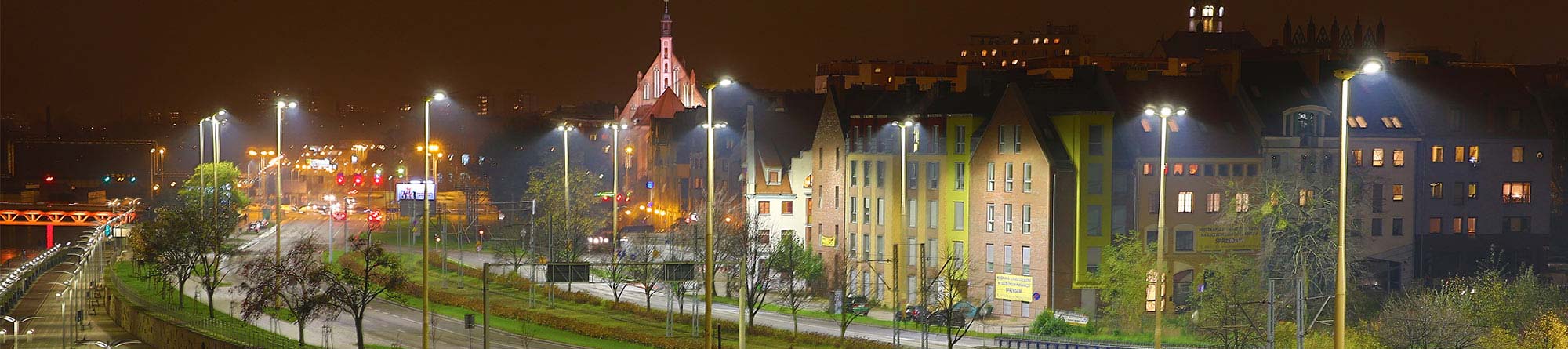
Sodium street lights were removed from the center of Szczecin, Poland and replaced with energy-efficient LED lighting. In total, almost 5,000 Philips Luma LED luminaires were installed, 1,888 of which are managed by Interact City Lighting asset management and Scene management software.

Szczecin
Poland

“Interact City provides a high level of flexibility to meet the different lighting needs in our city at any time.”
- Radoslaw Tumielewicz, Director of Roads and Transport Authority, Szczecin

Customer Challenge
Szczecin aims to be an attractive city for investors and tourists, as well as a safe and friendly city for its citizens.
To enhance its attractiveness and competitiveness, the city’s municipal authorities raised funding under the energy-efficient street lighting priority program of the Green Investment Scheme (GIS) in Poland, aimed at replacing existing street lighting with a modern, eco-friendly, and economical system.
Hassle-free connected lighting
Szczecin is the seventh most populous city in Poland, with over 400,000 residents. A center of the country’s maritime economy, the north western city handles shipping from around the world. Because the downtown area is filled with greenery and rivers, Szczecin is nicknamed the ‘Floating Garden’ and it wants to build on its reputation as an attractive place for investors and tourists, as well as a safe and friendly city for its citizens.
Energy-efficient LED luminaires, combined with Interact City software, were selected for the project. With centralized communication and control of individual light points, the network was transformed into a smart lighting system. With Interact City Scene management, individual luminaires can be switched on and off, or dimmed to a specific lighting level, on an ad hoc basis, or according to a daily or seasonal calendar.
Interact City lighting asset management software delivers valuable information on each luminaire’s status and energy use, while automatically sending fault notifications in case of an outage. Altogether, the connected street lighting system provides cost savings of up to 70%, contributing significantly to Szczecin’s smart city approach. With no expensive ‘scouting’ for luminaire outages, both energy and maintenance costs are significantly reduced, improving the overall management of the city’s lighting. If luminaires do fail, the maintenance crews can be notified immediately, improving efficiency as well as lighting standards.
Discover other case studies
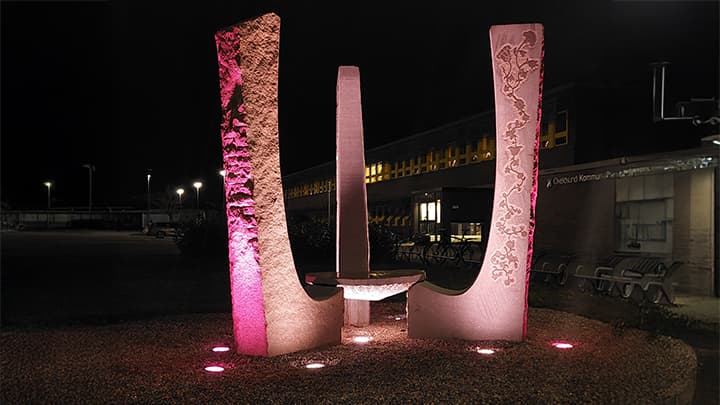
Kraftsamlaren by Farula Lighting Design
The lighting concept is specifically created for the sculpture. My own idea to enhance it, is that the light on the chairs changes slowly, almost imperceptibly unless you stand or sit there for a long time.
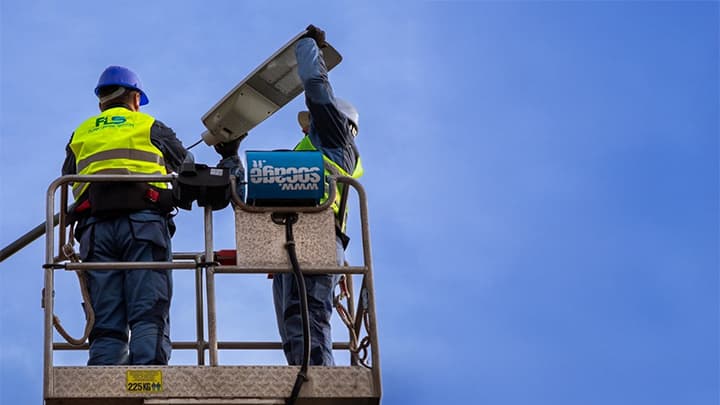
Brașov City by Flash Lighting Services SA
Flash Lighting modernizes Brașov's public lighting by replacing 8,425 fixtures with smart LED systems, cutting energy use by 60% annually.
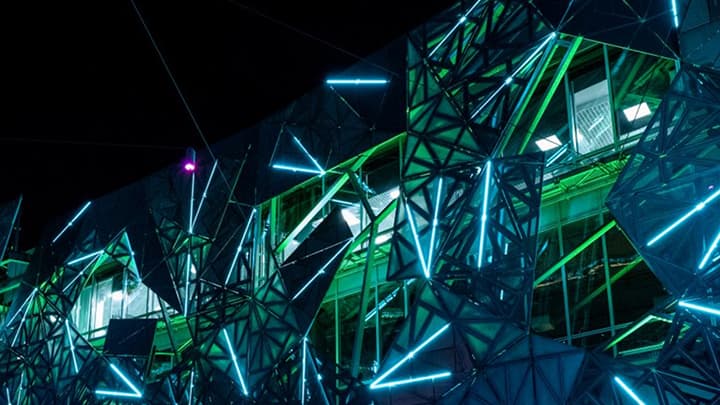
Federation Square by bluebottle
bluebottle expanded Fed Square’s iconic façade lighting, delivering a new architectural system that illuminates the rear of the building, The Ian Potter Centre: NGV, and the car park façade. Dynamic strip and spot lighting now extend Fed Square’s night-time identity with a cohesive, event-responsive glow.
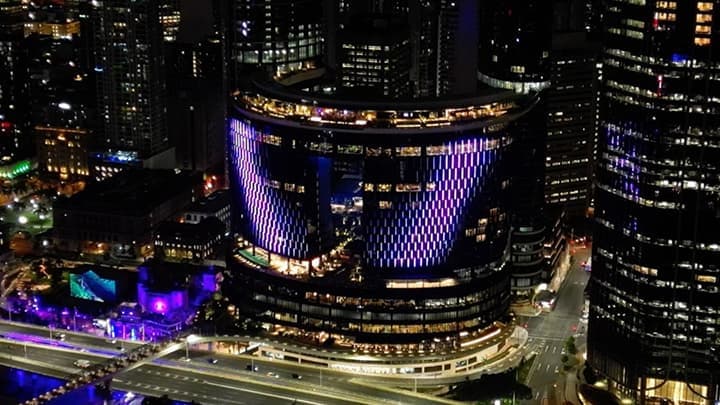
Queen's Wharf by bluebottle
bluebottle partnered with client Perigon Electrical to deliver Australia’s largest façade lighting pixel map! Using the Pharos VLC controller and thousands of Philips UNI fixtures, the installation creates immersive light and sound shows that transform the riverfront precinct into a vibrant, nightly spectacle.
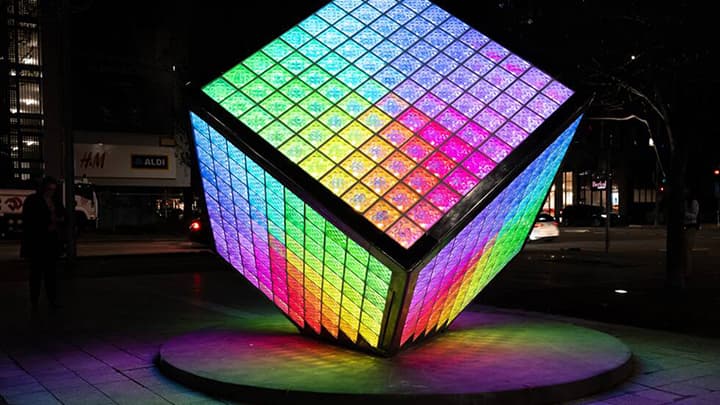
Illumicube by Sound Advice Australia Pty Ltd.
A re-imagineering of the 35-year-old Illumicube in the heart of Canberra, restoring its 570 glass bricks with modern technology. Using Color Kinetics iColor Flex LMX gen2 Mini 50 Node with individual node control, the artwork now delivers an infinite range of dynamic patterns and lighting effects for renewed public engagement.
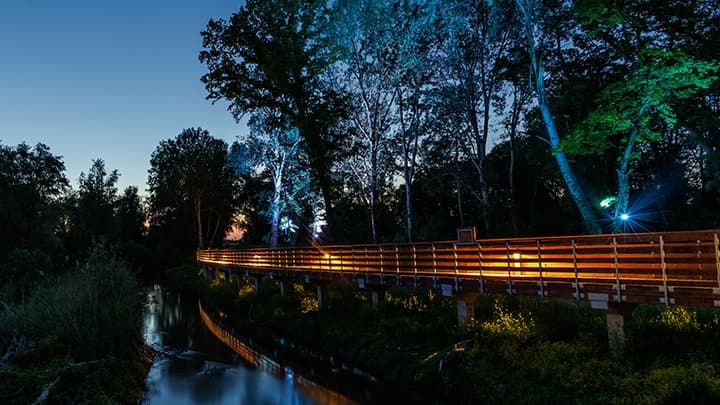
Vukovar promenade Croatia by Lipapromet
A centuries-old mixed forest bordered by the wetlands of the Vuka River has been brought to life using dynamic lighting to illuminate the treetops.
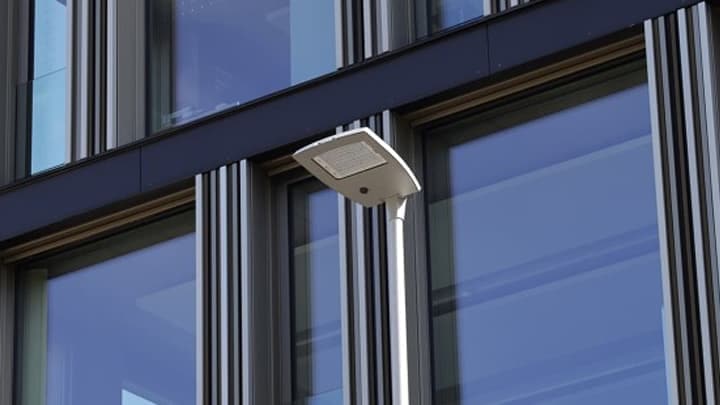
City of Grenchen by Elektron AG
ELEKTRON AG and Signify realized Switzerland’s first circular luminaires "Luma gen1 UP" connected to Interact City.
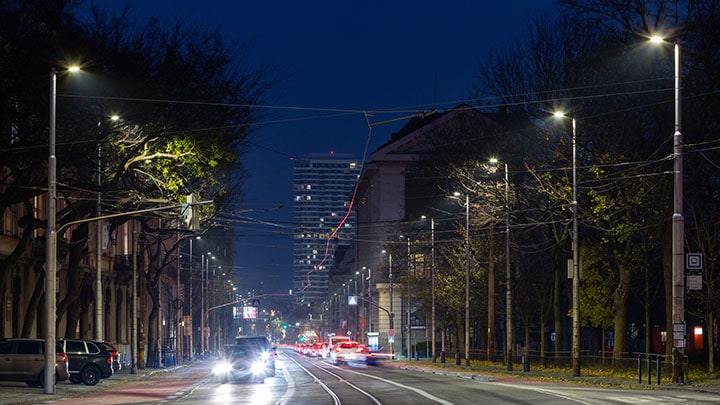
Bratislava smart lighting
New advanced LED street lighting technology from Signify will significantly reduce Bratislava's carbon footprint by 672 tons of CO2 per year.
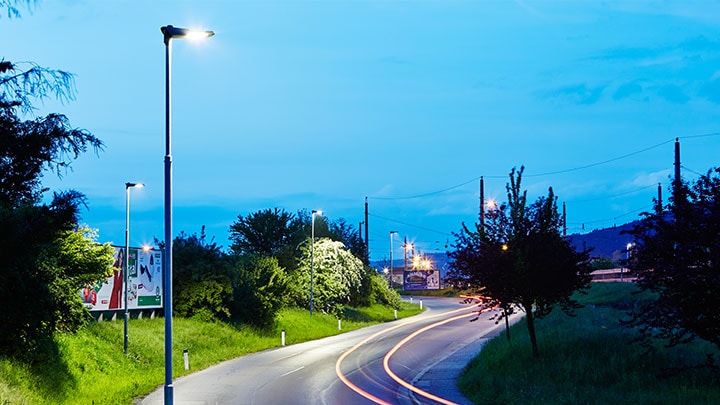
Smart street lighting –Knittelfeld, Austria
The Austrian municipality of Knittelfeld upgraded its street lighting in an ambitious project involving 2,000 LED light points controlled by Interact City.
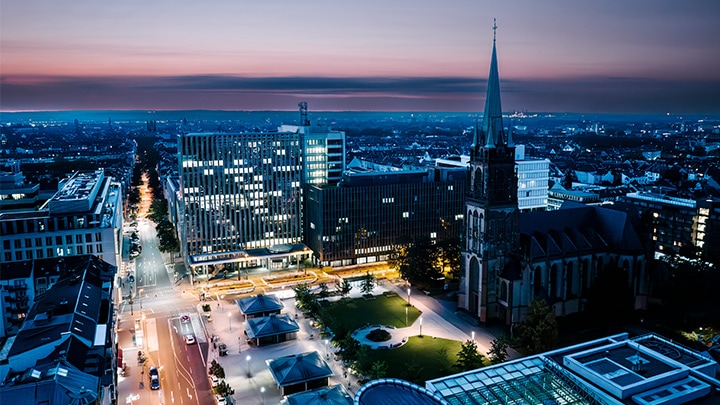
Düsseldorf smart lighting
3,000 public light points have been added to the Interact system as part of Düsseldorf's push to become climate-neutral by 2035 and develop into a smart city.
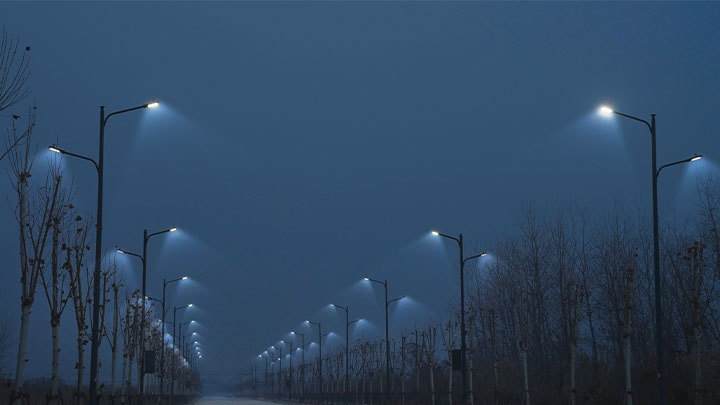
Huanggang - Hubei
With Signify, the city of Huanggang upgraded to a smart, connected system of LED street lights to reduce carbon emissions and improve citizens' quality of life.
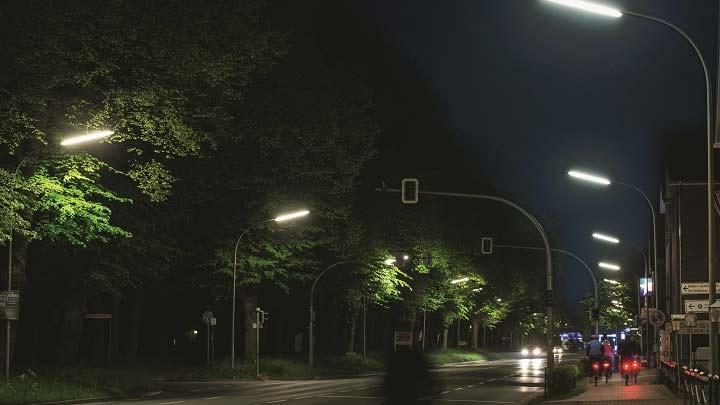
Connected LED street lighting - Germany
Connected LED street lighting controlled and monitored by Interact City has increased energy effiicency and reduced costs in Aurich, Germany.

Starting a project?
We’d love to hear from you.