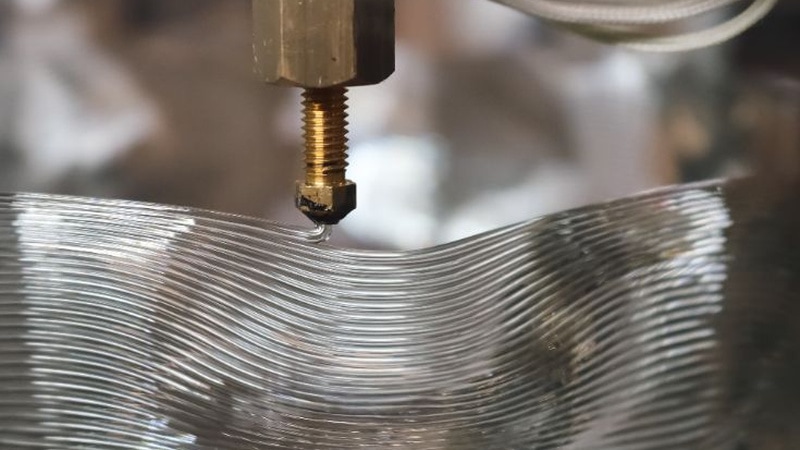
3D printing is a highly flexible, more sustainable form of manufacturing, in which luminaires can be made with raw material that has already been recycled, tailored to the customer’s exact needs and recycled at the end of their life. In 3D printed luminaires, nearly every component may be reused or recycled – thanks to a consistent disassembly concept –supporting the concept of a circular economy, which means moving away from linear production and consumption models, where things are used for a short time and thrown away after use. At the end of the product’s lifecycle, the materials can be easily broken down, then simply shredded and recycled. What’s more, when compared with traditional luminaries, these innovative circular designs use no paint as the lamps are already pigmented, as well as fewer parts, and fewer screws. Moving to 3D printing can, arguably, help us accelerate the shift to an economy that reuses resources wherever possible, making them good for the environment and producing stock on demand, when needed.
In the context of retail, 3D printed lights, as well as benefits relating to sustainability, can offer individualisation, can be tailored to add to the appeal of your store, whether that be the shape, colour or texture of the product. These lights allow co-creation and customisation, providing design freedom and brand identity. This flexibility and design freedom allows for an almost unlimited number of different luminaire shapes – an impossibility with traditional production methods. Another advantage is that of scalability. Retailers can order products at a minimum quantity of thousands of luminaires for deployment across various locations or just one luminaire, making this an even more attractive offer. For example, leading travel company TUI wanted to upgrade its in-store lighting and environmental impact was top of mind. 3D-printed lighting offered a circular solution, perfectly aligned with TUI’s sustainability agenda.
Serviceable Luminaires
At Signify we created a set of sustainable design rules helping us continuously optimise for circularity and lower the carbon footprint of our lighting products. The first category is Serviceable Luminaires. Serviceability refers to the ability to prolong the technical and economic lifetime of the product, after it has been put into service. Lighting designed for serviceability is designed to meet the evolving needs beyond rated service life from start to finish – including service and repair, upgrades and replacements. These luminaires are around the principles of lighting for Circularity: recyclable, serviceable, energy-efficiency, connectable and upgradable, ensuring a long lifetime with high efficacy.
Another important aspect is that of Circular Components: These components make any lighting sustainable as they are made of recyclable parts, such as drivers, controls, and LED boards and can easily be recycled. Their specifications reach the most rigorous standards for durability and failure rates. And by only having to replace a single component when it breaks or reaches the end of its lifetime, retailers can extend the lifespan of a luminaire beyond the lifespan of its parts, making the lighting a part of their sustainability plans.
The third category is Intelligent Systems which can constantly monitor light fittings. This feature tells us when and where to perform maintenance, cutting down on waste, costs, downtime, and workforce. Further, these systems can optimise light levels; for example, to create the highest levels of energy savings or increase eye comfort, in addition to enhancing the in-store experience for customers. For example, Hoogvliet supermarket has created a differentiated in-store environment in its new store with the installation of LED lighting and sensors controlled by Interact Retail software. The lighting system enables flexibility and enhances the shopper experience while helping the store reduce costs and improve operations.