Designing for those moments when human presence is needed
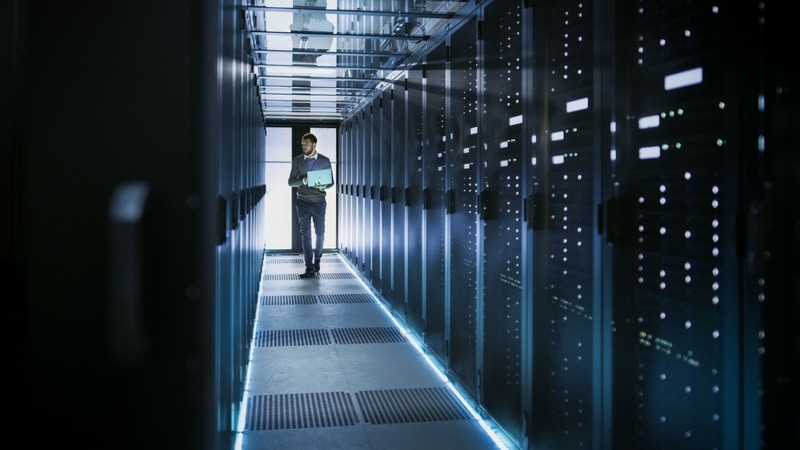
It’s important to recognize that a “lights-out” data center isn’t a “people-out” data center. As facilities become more automated and less frequently occupied, people remain critical particularly when maintenance, inspection, or emergency response is required. What changes is how the building needs to support them.
For maintenance teams, lighting should provide clear, consistent visibility in technical spaces without requiring manual configuration every time someone enters. Occupancy and presence information can help ensure the right areas are illuminated when needed, while automated schedules and responses reduce unnecessary interaction with the system.
There's no natural light to rely on in a windowless data hall. Losing the lighting means losing visibility of the room. Reliable, responsive lighting is what keeps people safe when they do need to be on site During emergency situations, clear pathways, well-lit access points, and reliable emergency lighting can help people navigate safely and quickly, while appropriate illumination makes equipment, interfaces, and other operational information easier to identify.
The goal isn’t to keep every space permanently illuminated for the occasional human presence. It is to make sure that the infrastructure responds intelligently when people do need to be present.
For lighting professionals, this means designing systems around both automated operation and human intervention. In a lights-out facility, good lighting remains an essential part of the safety and operational infrastructure unobtrusively ready to support the people who keep the data center running.
What should the future data center infrastructure look like?
The “lights-out” data center may have fewer people walking its corridors, but that doesn’t mean its infrastructure can afford to become less visible. Quite the opposite. As human intervention decreases, the intelligence, connectivity, and visibility built into the facility becomes increasingly important.
Lighting professionals need to consider four defining characteristics when designing lighting systems for highly automated data centers:
- Connected
Systems communicate and share information rather than operating as isolated assets.
- Observable
Operators can see what is happening across a facility—or an entire portfolio—from wherever they are.
- Automated
Routine decisions and responses happen without unnecessary manual intervention, improving consistency and operational efficiency.
- Human-centric
When people do need to intervene, infrastructure provides the visibility, information, illumination and control they need to do so safely and effectively.
In the highly automated data center, the physical infrastructure lighting included must be intelligent, connected, and observable. Expertise in intelligent lighting, connected controls, building systems integration, remote management, and automation, therefore, becomes increasingly valuable. With connected solutions like Signify Dynalite, lighting can become part of a wider intelligent infrastructure, helping data centers operate more efficiently while remaining ready for the people who keep them running.