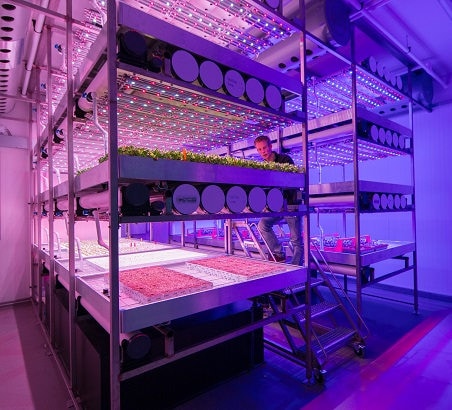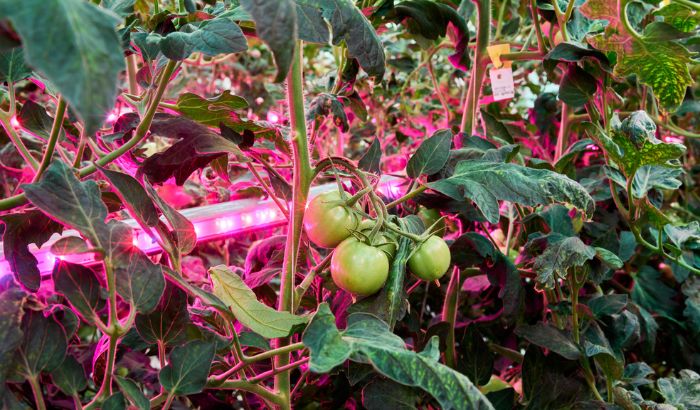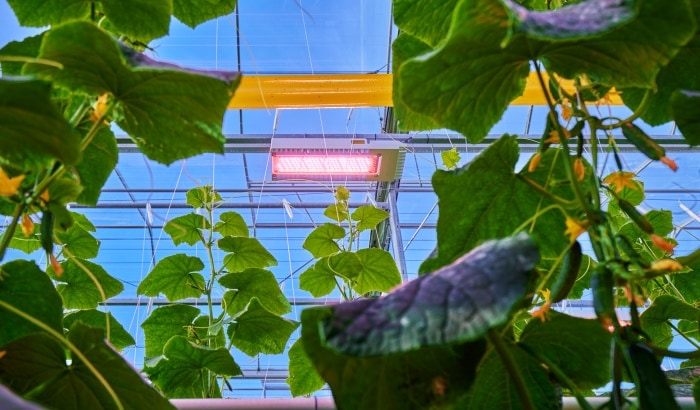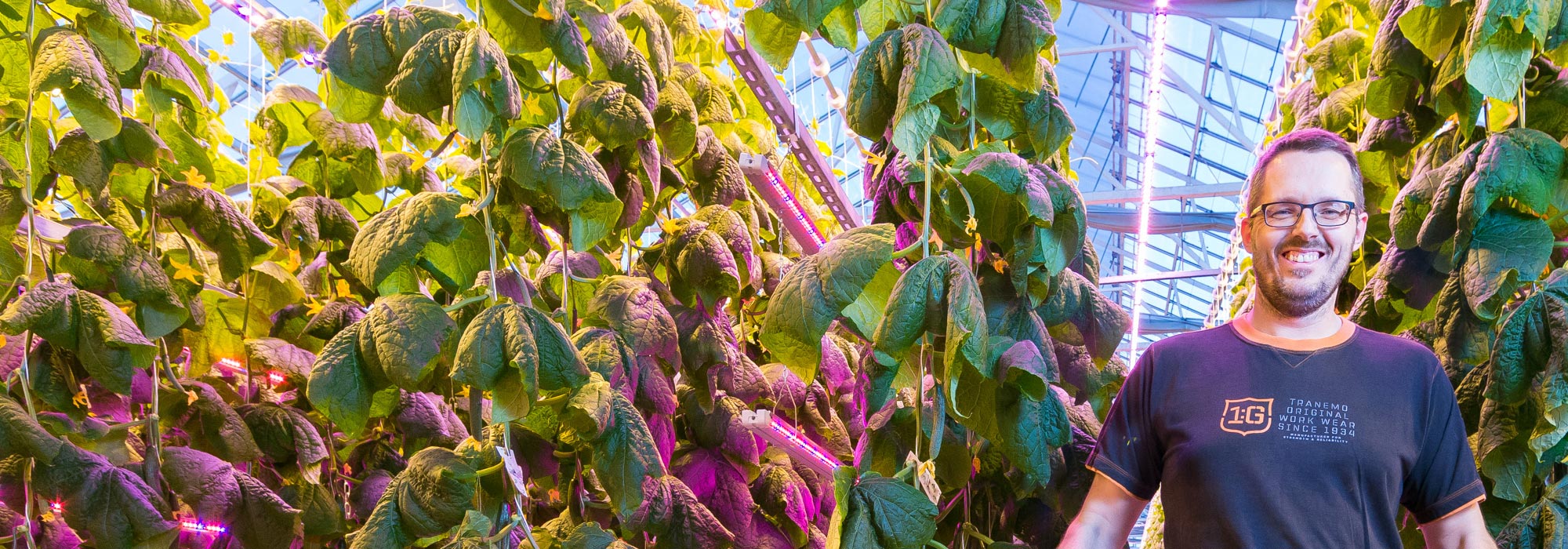
Man smiling in front of plants in a greenhouse lit by Philips LED grow lights
horticulture

How does light affect plants and people?

How does light affect plants and people differently?

Waking up this morning, I noticed a big difference compared to yesterday: it was still quite dark and the sky was covered with thick clouds, whereas yesterday it was bright and sunny! The dreary gray sky did not stop me from getting up. I had to get to work and there was still plenty of light for me to go about my daily activities. For the plants in my garden though, the difference in sunlight has a much bigger impact than it does on me!


The sun continuously emits radiation across a wide spectral range. Which part of that reaches earth depends strongly on where you are and what the weather is like. In fact, the spectrum remains much more stable than the amount of radiation. The spectrum varies slightly depending on location and weather, but aside from dusk and dawn, it always looks similar, ranging from UV to IR radiation. 

Graphic about primary growth process for plants

So how does this affect plants? The primary growth process is photosynthesis, which converts CO2 and H2O into sugars using light.


There is a particular part of the radiation spectrum that plants use for photosynthesis, called Photosynthetically Active Radiation or PAR. It is measured in number of photons or light particles and occupies the wavelength range of 400 to 700 nm.

Photosynthesis explained

Since plants and people respond differently to light, we have to use different units to describe light in relationship to plants and people. And this is an important thing to keep in mind if you are considering using LED grow lights to cultivate plants.

The unit we use to measure the amount of light visible to humans is ‘lumen’ or ‘lux’ which means the number of lumens per square meter. Lumen weighs a light spectrum along the human eye sensitivity curve, which reaches its highest pointin the green part of the spectrum.


To measure light in relation to plants, we use Photosynthetically Active Radiation (PAR), which counts all photons in the 400 to 700 nm range. The units of measure are photosynthetic photon flux (PPF) and the unit of measure is mmol.s-1 and photosynthetic photon flux density, (PPFD) and its unit is mmolm-2.s-1.

Graphic measure light in relation to plants

So what does this have to do with cloudy days? Since people only need only relatively little light to see, we generally can still get our job done on a cloudy day. However, for plants light is the engine of growth.  You could say that plants get a lot less done on a cloudy day than a person does.


Picture of Esther de Beer

About the author

Esther de Beer is Program Manager of Pre-development and Research at Philips Horticulture LED Solutions. She spends her days trying to make LED grow lights more effective. In this series of articles she explains the basics of how light works and how it affects plant growth.

Discover other articles

Follow us on a new journey combining floriculture and vertical farming

Plant specialist shares first results from flower trials conducted at BrightBox, a climate-controlled vertical farm test facility.

How LED intercanopy lighting boosts high-radiation greenhouse yields

LED intercanopy lighting enhances greenhouse yields by improving light distribution, supporting uniform growth and delivering higher crop quality year‑round.

LED inrush current and the financial impact on lighting design

It’s critical to be able to receive the proper specifications on inrush current and other key technical factors, or the project risks unplanned costs.

5 Things to check when comparing LED grow lights

The key parameters to check when comparing lighting designs for LED grow lights from different manufacturers. So your LED lighting investment delivers the full performance you paid for.

Where to buy

Our LED grow lights are sold through a global network of certified partners.

Newsletter

Stay up-to-date with the latest learnings and insights from your peers.

Starting a project?

What are the best LED grow lights for your situation? We are here to help you.