Optimizing greenhouse production with LED intercanopy lighting has become increasingly relevant, especially in environments characterized by high natural sunlight or strong supplemental toplighting. High-wire crops such as tomatoes often experience a rapid decrease in light levels toward the lower parts of the canopy. When abundant light is supplied from above, either naturally or through toplighting, further increasing upper illumination does not always yield additional benefits. This can result in saturation of the upper leaves while deeper layers receive insufficient light. The challenge is further amplified in lower greenhouse structures, where the proximity between fixtures and crops restricts the effectiveness of toplighting in penetrating the canopy and distributing light uniformly. Consequently, exclusive reliance on toplighting can lead to uneven plant development and reduced yield.
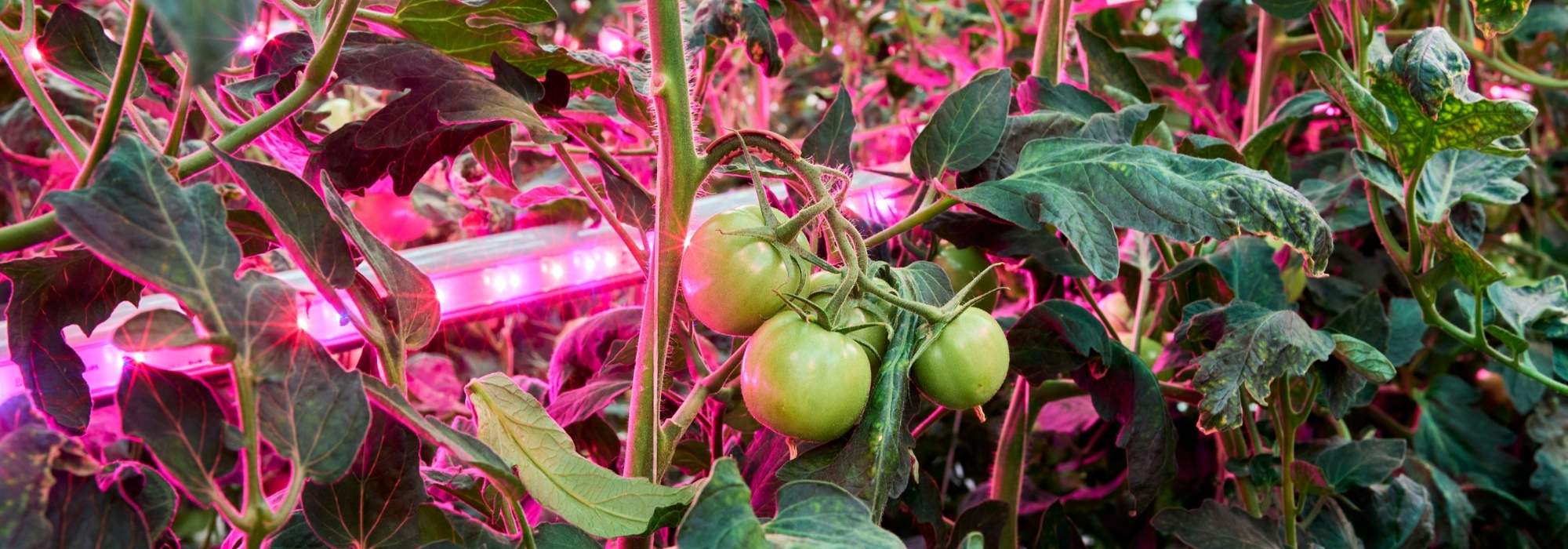
Philips LED interlighting addresses this issue by delivering light directly to the lower and middle sections of the crop canopy. This targeted approach ensures that all leaves, including those in shaded areas, receive adequate light for optimal growth, regardless of the intensity of sunlight or toplighting. Rather than expending energy on already saturated upper leaves, interlighting enhances conditions where they matter most for photosynthesis and plant health.