Global - English

Adaptable lighting: Data-driven driving decisions

As traffic patterns evolve, data is enabling more responsive lighting strategies. Contextual and adaptable approaches offer new ways to align illumination with real-world conditions and safety needs.


Data-driven driving decisions


Road lighting rarely attracts attention when it works well. It is simply there – quietly supporting drivers, cyclists and pedestrians after dark.


But, as traffic patterns become more complex and expectations around safety rise, the way lighting is planned and managed is starting to change.


Increasingly, lighting is being viewed not as static infrastructure but as part of the wider road safety system. Data is central to that shift. Used well, it allows lighting to respond to real conditions on the road, rather than relying on fixed assumptions made years earlier.


Two ideas sit at the heart of this change: contextual and adaptable lighting. Together, they are helping authorities move from a reactive approach towards one that is more responsive, more reliable and more closely aligned with risk.

Roads change: lighting has to catch up.

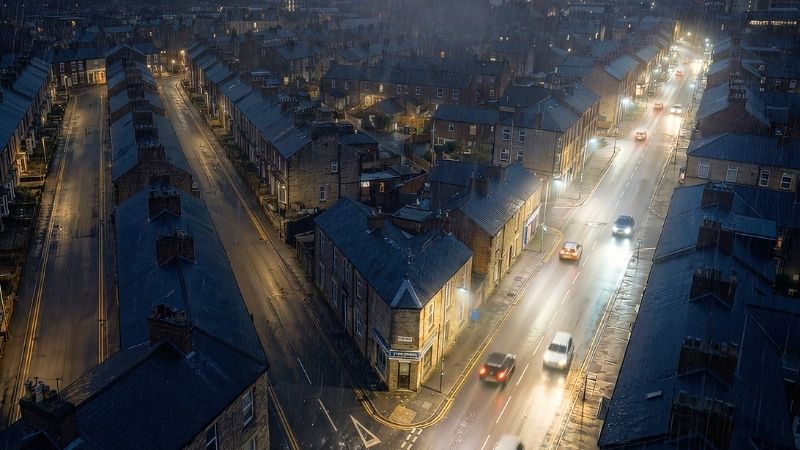
Traffic flows vary by the hour. Pedestrian activity peaks and falls. Weather can change visibility in minutes. Yet road lighting has traditionally been designed around relatively static models – fixed lighting classes, preset dimming schedules and routine maintenance cycles.


That approach, to be fair, has delivered consistency and compliance, but it does not always reflect how roads are actually used. Data is beginning to close that gap. Information on traffic levels, environmental conditions and asset performance makes it possible to adjust lighting in response to changing risk, rather than keeping it the same throughout the night.


Contextual and adaptable lighting: light where it matters

Contextual and adaptable lighting is about using data to apply light more intelligently. Instead of assuming risk is constant, lighting levels can be adjusted to reflect what is happening on the road at any given time.


During busier periods, or in poor weather, lighting can be increased to improve visibility and driver awareness. When roads are quieter, it can be reduced without compromising safety. Junctions, crossings and other conflict points can receive more attention when they are most heavily used.


This is not about abandoning standards or over-lighting the network. It is about using professional judgement, supported by data, to apply existing guidance more effectively.


The aim is simple: better visibility when risk is higher, without unnecessary lighting when it is not.

Turning lighting data into insight

Modern lighting systems also generate data that can inform decisions beyond day-to-day operation. Over time, this information can reveal how roads are used and where lighting strategies may no longer align with reality.


For traffic and safety teams, this creates opportunities. Lighting data can help highlight locations where demand is consistently higher than expected, or where lighting performance may need to be reviewed. It can support targeted upgrades, reclassification exercises or the introduction of complementary safety measures.


In this way, lighting becomes more than a background service. It becomes a source of insight, supporting evidence-based approaches to road safety.


Reliability: a fundamental part of safety


None of these matters, of course, if the lights are not working. Reliability remains a fundamental safety issue, particularly on traffic routes and pedestrian crossings where outages can increase risk.


Access to asset data is helping authorities better understand how lighting systems perform over time. This supports more informed maintenance planning, improved fault response and a clearer view of network condition.


The benefits are practical: fewer unexpected outages, more consistent lighting performance and greater confidence for road users moving through the network at night. From a safety perspective, consistency of lighting is just as important as adaptability.

One size does not fit all

While the principles of data-driven lighting are widely shared, their application varies significantly between countries. National standards and regulatory frameworks play a decisive role in what is permitted and how systems are implemented.


Italy offers a clear example. Under Italian practice, traffic adaptive installation (TAI) typically allows three dimming levels, while full adaptive installation (FAI) permits four.


FAI schemes also require the integration of weather and luminance data, ensuring lighting responds to environmental conditions as well as traffic demand.


Data expectations differ too. In Italy, traffic data may be assessed at one-minute intervals, allowing highly responsive control. In the UK, five-minute intervals are more common, reflecting different regulatory assumptions.


These approaches are defined by UNI 11248, which references EN 13201 while applying national interpretations [1]. The lesson is clear: data-driven lighting must be shaped by local standards and guidance, not just by what technology can deliver.


From reaction to responsiveness

Taken together, contextual and adaptable lighting point towards a more responsive way of managing road lighting. Instead of relying on static assumptions, authorities can use data to focus attention where it will make the greatest difference to safety.


This shift also brings greater clarity. Decisions about lighting levels, maintenance priorities and investment can be supported by evidence, helping to balance safety, sustainability and cost pressures.


sabugal-800x450.jpg

Keeping safety at the centre

Road lighting will always be a background part of the urban transport system, but its role is becoming more visible. Data does not change the purpose of lighting; it strengthens it.


By making lighting more responsive and more reliable, adaptive control support safer roads and more informed street lighting management. The challenge now is to apply these tools carefully and proportionately, in line with established standards and professional judgement.


In summary, used well, data allows lighting to do what it has always done – support safe movement after dark – only with a clearer understanding of when and where it matters most.


Reference

[1] UNI 11248:2016: ‘Road lighting – Selection of lighting classes’, UNI, 2016, https://http.uni.com/en/uni-11248-2016; BS EN 13201-2:2015 – TC

‘Road lighting – Performance requirements’, BSI, 2016. https://knowledge.bsigroup.com/products/road-lighting-performance-requirements-1

About the author:

Pedro Pinto

David Orchard

Director of Outdoor Smart Solutions, Signify

About Signify


Signify (Euronext: LIGHT) is the world leader in lighting for professionals and consumers. We proudly bring to market the world’s best lighting brands, from Signify, Philips, Philips Hue, Signify Interact, Signify Dynalite, Color Kinetics and many more. Our advanced products, connected systems and services unlock the extraordinary potential of light for brighter lives and a better world. In 2025, we had sales of EUR 5.8 billion, approximately 27,000 employees, and a presence in over 70 markets. We are in the Dow Jones Best-in-Class World Index , earned a CDP ‘A’ score for climate performance and transparency and hold the EcoVadis Platinum rating. 


News and updates from Signify can be found in the Newsroom, on LinkedIn and Instagram. Information for investors is located on the Investor Relations page.

More blogs

  • When innovation scales: Launching Philips Skylight

    June 09, 2026

    When innovation scales: Launching Philips Skylight

  • Making the beautiful game unforgettable

    June 16, 2026

    Making the beautiful game unforgettable

  • The right lighting recipe: The secret ingredient to the ultimate experience

    April 15, 2026

    The right lighting recipe: The secret ingredient to the ultimate experience