
The three-year low-energy tomato trial led by Grodan and Signify, together with Ridder, Wireless Value, Normec Groen Agro Control and Axia Vegetable Seeds, shows that low-heat cultivation under full LED is no longer a future concept, but a practical growing strategy. In the final year, the programme confirmed that this approach also works for larger truss tomatoes, not only cherry tomatoes. The key conclusion is that success depends on a holistic strategy in which lighting, irrigation, nutrition and climate management are carefully aligned.
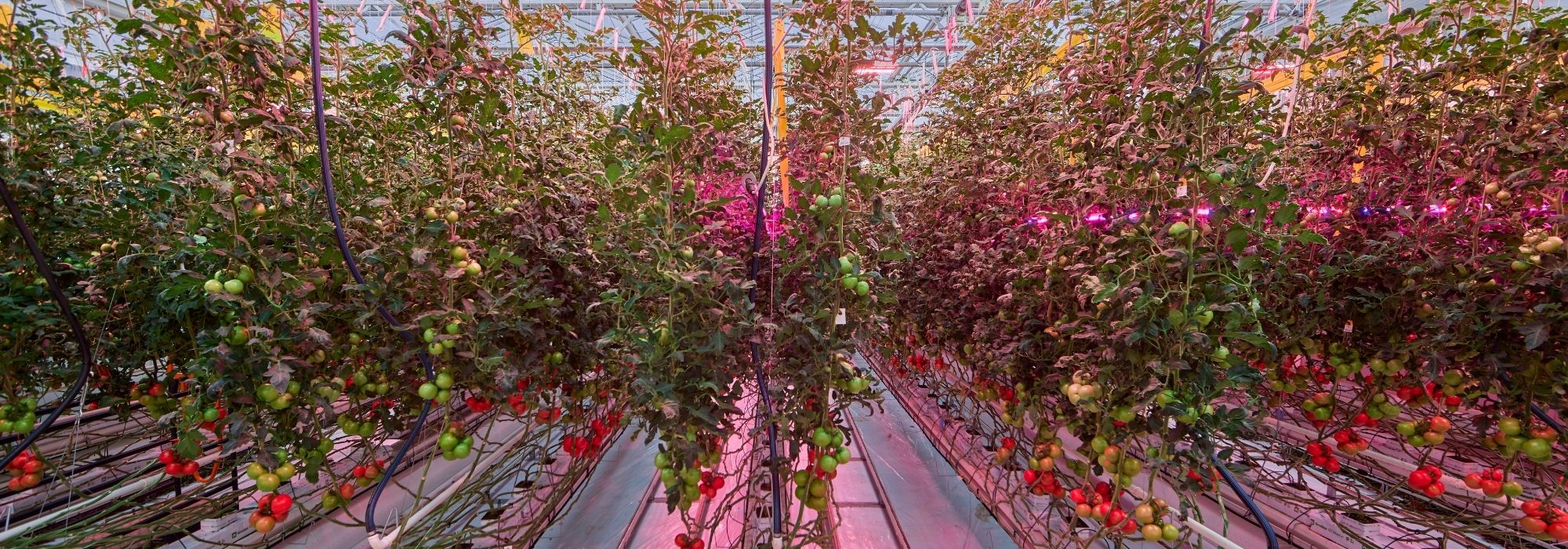
3-year joint research trial confirms energy savings and quality benefits of a holistic approach to lit tomato cultivation
How much energy can growers save with a full-LED low-heat strategy?
A major outcome of the trial is the scale of energy savings already possible today. By combining full LED with advanced insulating screens and active air dehumidification, the partners reduced the overall heat input (rail + grow pipe) by more than 50% compared with common practice. Dehumidification slightly increased electricity use, but this accounted for less than 4% of total energy input. The results show that growers can significantly cut gas consumption while maintaining stable crop conditions.

Why does interlighting make such a difference in yield & crop performance?
The lighting results were equally strong. In year 3, the LED level increased to 350 μmol/m²/s, in line with the trend toward higher intensities. Within this setup, the comparison between toplighting only and toplighting plus interlighting showed a clear benefit: interlighting delivered 10% more yield. It also increased fruit weight by 4% and supported faster flowering and fruit set, leading to one extra cluster. These results confirm that combining toplighting with interlighting is a powerful way to improve both productivity and crop performance.

Why is climate stability essential for sustainable energy savings?
The research also showed that energy savings and yield gains are only sustainable when crop stability is maintained. The trial therefore focused strongly on balancing light, temperature and humidity. Because higher light levels and closed screens increased humidity, active dehumidification became essential. By integrating sensor data, irrigation and climate settings in one platform, the team maintained a stable greenhouse environment with minimal crop stress. This supported predictable evaporation, nutrient uptake and assimilate distribution, resulting in healthier plants and more consistent production.
How can nutrient steering improve crop balance in low-heat cultivation?
The trial also delivered important findings in irrigation and nutrient management. Instead of steering mainly through higher EC, the partners showed that nutrient composition can be used more precisely to influence plant balance. Nitrate levels proved especially valuable for steering the crop more generatively and managing leaf area. This matters in a low-heat system, because a high leaf volume increases humidity and nutrient demand. For the larger-fruited Macxize cultivar, the team found that nitrate must be reduced carefully: a starting level of 13 mmol/l was needed to maintain uptake, later rising to 15 mmol/l. The results highlight the importance of steering on nutrient ratios and total uptake rather than EC alone.

How can nutrition reduce fruit quality issues such as blotchy ripening?
Fruit quality also improved, especially through a reduction in blotchy ripening in the Macxize variety. In full-LED tomato production, growers often lower potassium to reduce blossom-end rot, but this trial showed that low nitrate combined with adaptedpotassium level can raise the risk of green spots. By adjusting the nutrient recipe and increasing the potassium-to-calcium ratio from 1:1 to 3:1, the team achieved 15% higher potassium uptake during the lit season. This reduced blotchy fruits while maintaining the desired crop balance, showing that quality disorders can be addressed through more precise nutrient steering.

What role does sensor-based cultivation play in better decision-making?
Another major contribution of the trial is the value of sensor-based cultivation. With integrated monitoring of root-zone water content, EC, climate, plant weight, temperature and radiation, the team could align irrigation and climate strategy more closely with plant demand. Because the system remained stable and predictable, data could be used proactively rather than reactively. Weekly nutrient uptake analysis added further precision by showing what the plant was actually absorbing, opening the way to earlier intervention and more preventive crop management.

What do these results mean for commercial tomato growers?
Overall, the results show that low-energy tomato growing is already commercially feasible when approached as an integrated cultivation system. Growers can cut heat input by at least half, improve light use efficiency, increase yield by around 10% with interlighting, and improve fruit quality through more precise nutrient management. Just as important, the trial confirms that success does not come from a single intervention, but from combining stable climate control, balanced crop steering, targeted irrigation and a nutrient recipe tailored to plant demand. For growers aiming to reduce energy costs without sacrificing production, the programme offers clear and practical proof.
Discover other articles
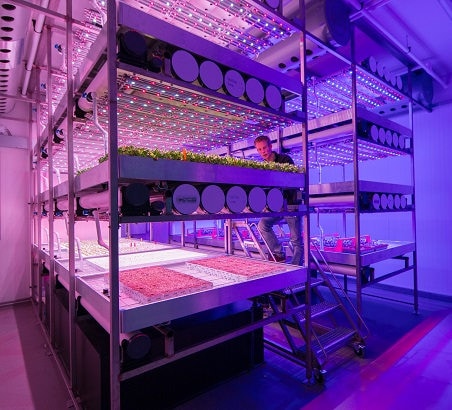
Follow us on a new journey combining floriculture and vertical farming
Plant specialist shares first results from flower trials conducted at BrightBox, a climate-controlled vertical farm test facility.
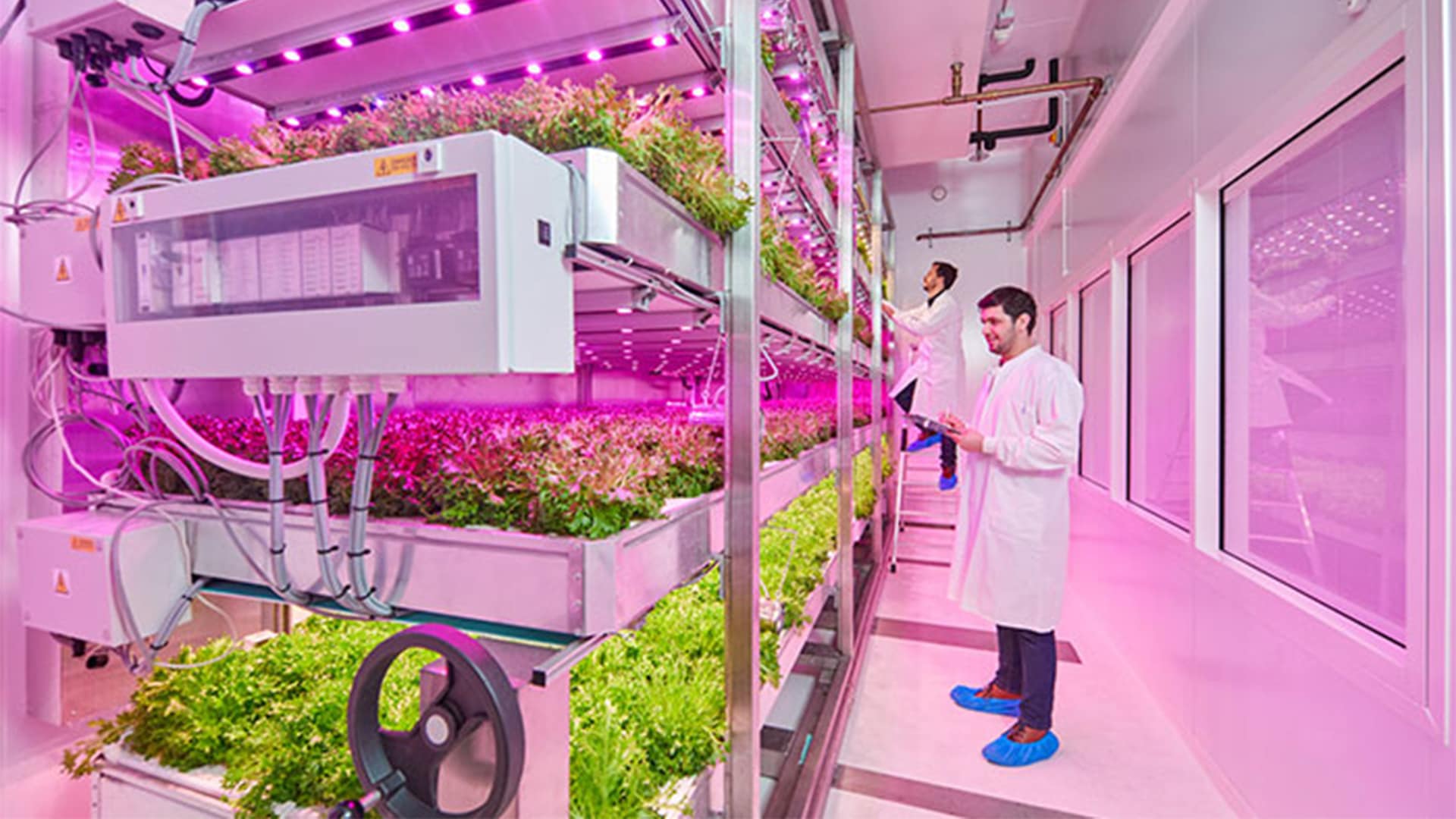
The role of sensors and data collection in a successful vertical farm
Sensors and data play a pivotal role in vertical farming and they’re ready to transform the future of vertical farming. It is all because sensors enable us to monitor these growth conditions, recognize anomalies and identify problems as early as possible.