United Kingdom - English

Making buildings work towards Net Zero

The building and construction sector can play a crucial role in addressing climate change, given that buildings contribute a significant per cent of global carbon emissions, primarily driven by energy consumption for lighting, heating, and cooling.

According to the 2022 Global Status Report for Buildings and Construction from the UN Environment Programme (UNEP), the building and construction sector accounts for 34% of global energy demand and 37% of energy-related emissions. Further, the UK Green Building Council estimates that approximately 70% of the UK’s non-residential building stock was constructed before the year 2000.


To achieve energy and carbon targets, and to realise the UK’s 2050 net zero targets, significant energy efficiency and carbon reductions are needed. Because the existing building stock is so energy-intensive, much of the sector will have to undergo some form of retrofit by 2050. This situation creates an urgent need to adopt more efficient and sustainable solutions while continuing to support productivity, comfort, and wellbeing for building occupants.


Reducing emissions in buildings is no longer optional. Regulations are becoming more demanding, tenant expectations are increasing, and organisations are under pressure to lower operating costs while improving performance. Addressing these challenges requires both innovation and collaboration. Let’s dive straight in to explore the two biggest challenges for buildings.
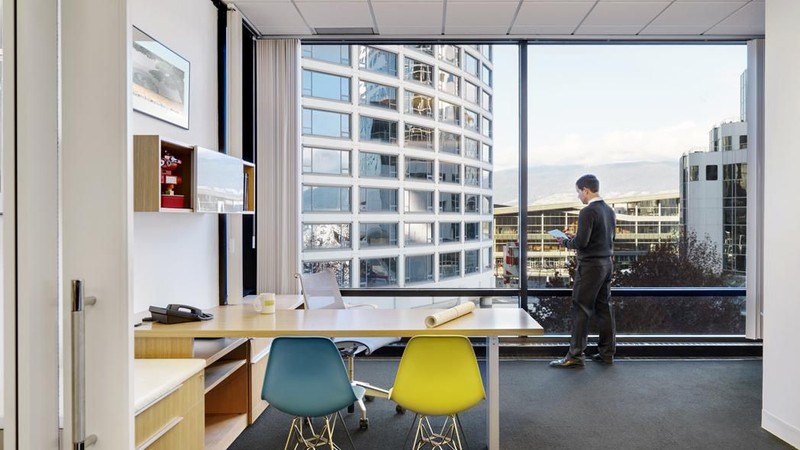
Person standing by a large office window, looking out over city buildings.

The case for sustainability


The challenge

Sustainability of a building extends beyond the building itself. A sustainable built environment protects and enhances people, places, and the natural environment, and is critical to reducing greenhouse gas emissions and tackling the climate crisis.


The demand for sustainable space is surging, with occupiers choosing sustainable buildings and solutions to support their own sustainability goals, investors responding to market expectations and increasing regulation to avoid the risk of stranded assets and acknowledging the need to act to secure a global sustainable future.

Owing to the emissions from a building and due to the increased awareness, retrofitting commercial buildings comes into sharp focus with an emphasis on clarity and consistency to the approaches required to decarbonise the existing built environment.


The solution

Lighting sits at the intersection of environmental responsibility and human performance. Well-designed and intelligently managed lighting solutions can help transform buildings into spaces that are both lower in carbon impact and better for the people who use them. 


Connected lighting solutions like Interact Office also play a crucial role in shaping the workplace experience. The right lighting conditions can support wellbeing, improve concentration, and create more engaging environments. For instance, tunable white lighting that changes throughout the day to reflect natural daylight patterns can help regulate circadian rhythms, supporting better sleep, mood, and alertness, particularly in spaces with limited access to daylight.

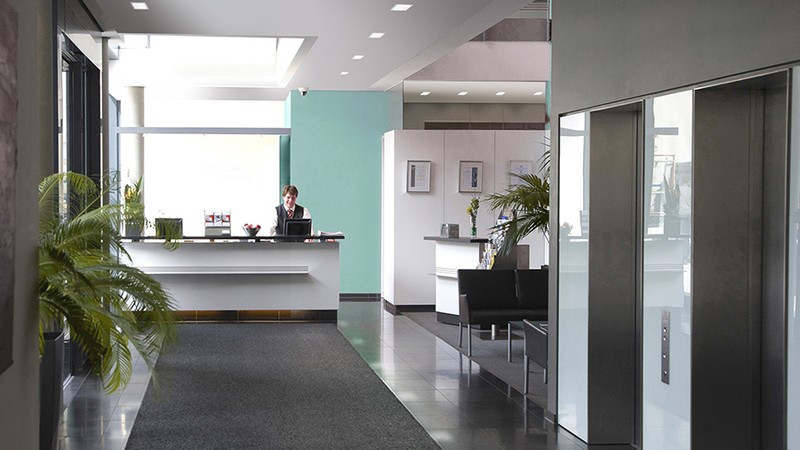
Office environment, reception

The case for regulations


The challenge

This pursuit of environmental sustainability in the built environment has sparked a heightened demand for reliable and transparent information that can guide informed decision-making and more environmentally conscious choices.


Because buildings are energy intensive and account for major carbon emissions, regulations aim to deliver an improvement in building performance, almost like setting new performance expectations for non-residential buildings. In the UK, this is driving an urgent need to up the energy performance of buildings to get better EPC ratings.

In the UK, the regulatory landscape includes a combination of building regulations, energy efficiency requirements, carbon reporting, and sector-specific standards. For instance;


The solution

Lighting remains one of the most accessible and impactful ways to reduce energy use in buildings. By upgrading to efficient LED technology, connected lighting platforms, and intelligent control systems, building owners can significantly lower energy consumption while enhancing the appearance and functionality of their spaces.


LED lighting consumes significantly less energy than traditional lighting technologies, making it one of the fastest ways to reduce emissions in both new and existing buildings. Intelligent lighting systems further enhance efficiency by utilising sensors and automation to adjust lighting according to occupancy and available daylight, ensuring that light is provided only where and when it is needed.

In conclusion


The greenest building is the one that is already built. Half the buildings that will exist by 2050 have already been built, so retrofitting them is key to achieve decarbonisation targets. 


Many experts consider retrofitting an existing building more challenging than building new. However, retrofitting can offer environmental, commercial and social benefits, such as reducing operational carbon through energy efficiency, improving health and wellbeing outcomes, preserving heritage sites, improving community spaces, and increasing property value. The good news is that solutions for helping to make the net zero transition exist. Energy-efficient lighting is one of these solutions.


As organisations continue to seek practical ways to meet sustainability targets and manage costs, lighting stands out as a proven and scalable solution. It is about more than illumination. It is about designing intelligent, sustainable environments that support both people and the planet.

About the author:

Bart Maeyen

Clark Morrow


Channel & Segment Manager, Professional lighting, Signify UK&I

About Signify


Signify (Euronext: LIGHT) is the world leader in lighting for professionals and consumers and lighting for the Internet of Things. Our Philips products, Interact connected lighting systems and data-enabled services, deliver business value and transform life in homes, buildings and public spaces. In 2022, we had sales of EUR 7.5 billion, approximately 35,000 employees and a presence in over 70 countries. We unlock the extraordinary potential of light for brighter lives and a better world. We achieved carbon neutrality in our operations in 2020, have been in the Dow Jones Sustainability World Index since our IPO for six consecutive years and were named Industry Leader in 2017, 2018 and 2019. News from Signify is located at the Newsroom, Twitter, LinkedIn and Instagram. Information for investors can be found on the Investor Relations page.

Meydan Bridge

More blogs

  • The Case for Connected LED Lighting Now

    August 14, 2026

    The Case for Connected LED Lighting Now

  • Sustainable Lighting Solutions for Net Zero Buildings

    August 12, 2026

    Sustainable Lighting Solutions for Net Zero Buildings

  • Connected Lighting for Industrial Facilities

    August 12, 2026

    Connected Lighting for Industrial Facilities