United Kingdom - English

Let Light Do the Talking: Designing Architecture for Life after Dark

Sameer Sodhi, Business Leader-Entertainment and Color Kinetics at Signify


Architecture has two identities: one by day, and another after sunset. As connected LED technology makes light more dynamic, should a building's night-time identity be designed with the same intent as its daytime form?


Architecture is usually conceived around daylight, with form, material, texture and scale considered for how a building looks and works during the day. Yet for many buildings and public spaces, the hours after dark are a large part of how they are experienced. At night, edges soften, materials behave differently, and an understated façade can become a landmark. A bridge or civic building can shift from infrastructure into something more emotional and memorable.


The question is no longer whether to illuminate architecture, but what role it should play after dark, and what story its light should tell.

Designing for the 'second identity'


Historically, architectural lighting has often been treated as something added towards the end of a project: a way to provide visibility, highlight architectural features or create an attractive nighttime appearance.


That approach is increasingly limiting.


With LED and connected lighting systems, illumination can now respond to events, seasons, audiences and place. Light can remain static when subtlety is appropriate, but it can also become animated, expressive or participatory when the occasion demands it.


This suggests a shift in mindset: nighttime identity should be considered from the beginning of the architectural design process, rather than added at the end. The opportunity is particularly significant in public architecture, where the impact of a building extends beyond its physical boundaries. A lit landmark can become a meeting point, a backdrop for civic events, a destination or a recognisable symbol of a city.

Classroom

From infrastructure to identity


The 2026 Lighting Public Spaces: Impact and Analysis report, commissioned by Color Kinetics, examines US installations and finds that dynamic architectural lighting can generate economic, social and cultural impacts extending well beyond illumination itself.


Consider Milwaukee's Daniel Hoan Memorial Bridge. Originally a functional transportation asset, its illumination has helped transform it into a recognisable visual icon and an expression of the city's waterfront identity. Its programmable lighting is used for civic events, holidays and community causes, while initiatives such as the Intern Challenge and Code the Hoan use the lighting installation as a platform for education and engagement.


 This is an important distinction. The value of the lighting does not come simply from making the bridge visible. It comes from giving an existing piece of infrastructure the ability to communicate.


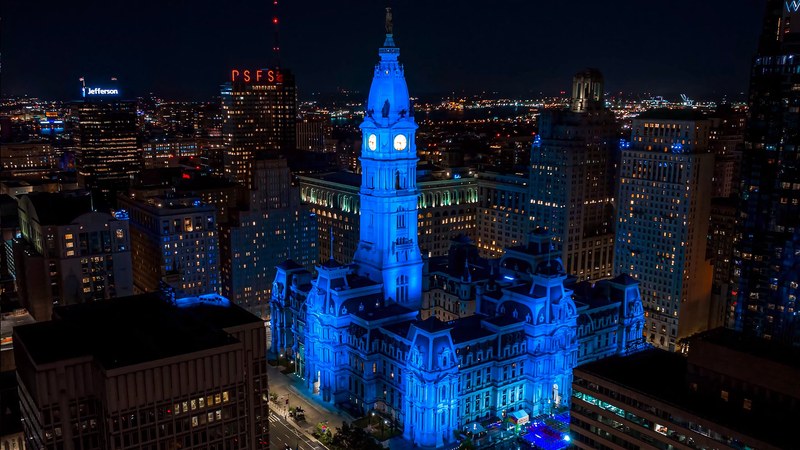
The same principle can be seen at Philadelphia City Hall. A historic building completed in 1901 has been given a new nighttime identity through programmable LED lighting. Its illumination can respond in real time to celebrations, causes and civic events, allowing the building to participate in the life of the city without changing its physical architecture.


The architecture stays the same. The experience does not.

When light becomes a social language


Another interesting facet is that dynamic light can also give communities a way to interact with their surroundings.


In the UK, Huyton Underpass, a popular commuter route underneath the track at Huyton railway station in Knowsley, has been has a lighting refurbishment. The project aimed to transform the underpass into a more attractive and welcoming environment for both drivers and pedestrians, enlightening this main route and the surrounding area.  The Grade II listed archway required a carefully thought-out installation, and the lighting was required to be both functional and artistic. The lighting scheme needed to create an increased sense of safety and security for both cars and pedestrians, with the products also creating an artistic finish through a colourful and eye-catching display.


The new lighting solution has improved the safety of the underpass for both drivers and pedestrians by creating a vibrant, well-lit tunnel and increasing visibility in the dark. It has also created a warm welcome to this key gateway into Huyton Village Centre. The range of stunning colours also makes this a more visually appealing pathway to create more enjoyable journeys for the residents of Knowsley.


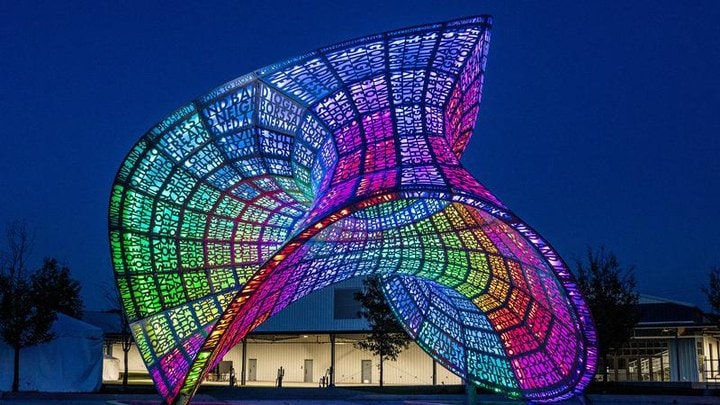
At Nashville's Fairgrounds, the illuminated sculpture Loqui incorporates words, stories and phrases contributed by more than 400 community members. Hundreds of individually controllable lights are integrated into the artwork, making light part of an installation whose purpose is fundamentally about giving the community a voice.
 Here, lighting is not merely decorative. It becomes part of the narrative.


That raises an intriguing question for architects and lighting designers: could the nighttime identity of a place become a form of public dialogue?


As connected systems become more capable, buildings and structures can respond to moments rather than simply exist in them. A civic building can acknowledge a celebration. A bridge can mark an event. An artwork can tell a story. A public space can change its atmosphere according to how it is being used.

Lecture hall

Spectacle needs purpose


There is, of course, a risk. More movement does not automatically mean better design. More colours do not necessarily create more meaning. The most successful nighttime architecture is likely to be that which understands when to speak and when to remain quiet.


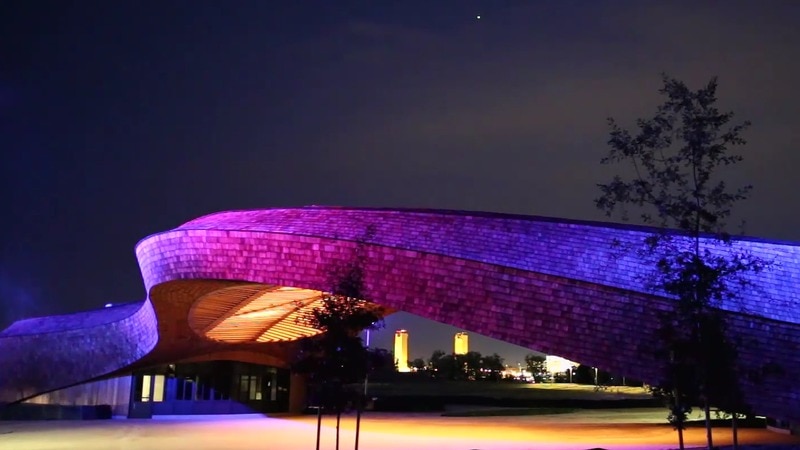
The Barn in West Sacramento offers an example at a smaller scale. Its programmable architectural lighting contributes to its identity as a gathering place, helping activate the riverfront beyond traditional hours. Concerts, festivals, fitness classes, movie nights and other events take place within the space, with the illuminated canopy becoming a recognisable visual feature.


 The lesson is not that every public space needs a spectacular light show. Rather, it is that lighting can help define what a place is for after dark.

The design approach


For architects and lighting designers, designing for life after dark means thinking beyond the façade. It means ensuring that the building communicates what it should i.e reinforce identity, create a sense of safety or pride, mark an occasion or just encourage community to stay longer.


While the objective will differ from project to project, the means are the same: light is the language.


Connected lighting makes those objectives more achievable because a single lighting installation can potentially support multiple modes of expression over its lifetime.

The most compelling future may therefore not belong to buildings that shout the loudest after sunset. It may belong to those that understand their context well enough to speak with purpose.


Architecture has always communicated through form, material and space. After dark, it communicates through light.


As connected LEDs continue to blur the boundaries between architecture, art, infrastructure and public experience, lighting deserves to move further upstream in the design conversation.


Because the nighttime identity of a building is not an afterthought. It is half of its story.

About the author:

Clark Morrow

Sameer Sodhi


Business Leader-Entertainment and Color Kinetics at Signify

About Signify


Signify (Euronext: LIGHT) is the world leader in lighting for professionals and consumers and lighting for the Internet of Things. Our Philips products, Interact connected lighting systems and data-enabled services, deliver business value and transform life in homes, buildings and public spaces. In 2022, we had sales of EUR 7.5 billion, approximately 35,000 employees and a presence in over 70 countries. We unlock the extraordinary potential of light for brighter lives and a better world. We achieved carbon neutrality in our operations in 2020, have been in the Dow Jones Sustainability World Index since our IPO for six consecutive years and were named Industry Leader in 2017, 2018 and 2019. News from Signify is located at the Newsroom, Twitter, LinkedIn and Instagram. Information for investors can be found on the Investor Relations page.

Meydan Bridge

More blogs

  • Architectural Lighting: Designing Buildings for After Dark

    October 28, 2026

    Architectural Lighting: Designing Buildings for After Dark

  • Making the beautiful game unforgettable

    June 16, 2026

    Making the beautiful game unforgettable

  • Smart LED Lighting for Schools

    September 01, 2026

    Smart LED Lighting for Schools