United Kingdom - English

Emergency lighting: A real business asset


When we think about the lighting in a workplace, emergency lighting is not the first thing that comes to mind. Attention is more often focused on energy efficiency, aesthetics, smart controls, occupant wellbeing or creating productive environments.


Yet when something goes wrong, lighting can form one of the most important parts of the ‘escape plan’.


A power failure, fire or other emergency can transform a familiar workplace into an unfamiliar and potentially hazardous environment within seconds. When normal lighting fails, people need to know where to go, how to get there and how to leave the building safely.


That makes emergency lighting far more than a regulatory requirement. It is a fundamental part of a building's safety and resilience – and one that businesses should be thinking about throughout the lifetime of a building, rather than only when a system is being installed, inspected or tested. If you’re still considering why you need an emergency lighting system then here are a few reasons:


  • First, ticking the box for critical safety infrastructure: The regulatory landscape reinforces the importance of getting emergency lighting right. The UK's emergency lighting standards have undergone significant updates, including the publication of BS 5266:2025, alongside the 2024 revisions to BS EN 1838 and BS EN 50172. These changes place renewed emphasis on areas including risk assessment, system verification, testing, documentation and maintaining the performance of emergency lighting systems.


This is important because compliance is not simply about installing the right equipment. A system that was compliant when it was installed may not necessarily remain effective throughout a building's lifecycle as buildings change, spaces are repurposed and lighting technology continues to develop. Emergency lighting therefore needs to be considered as a living part of the building that requires ongoing attention, maintenance and verification.


  • Then there is the human factor: There is another reason to ensure the emergency lighting system is robust: people.


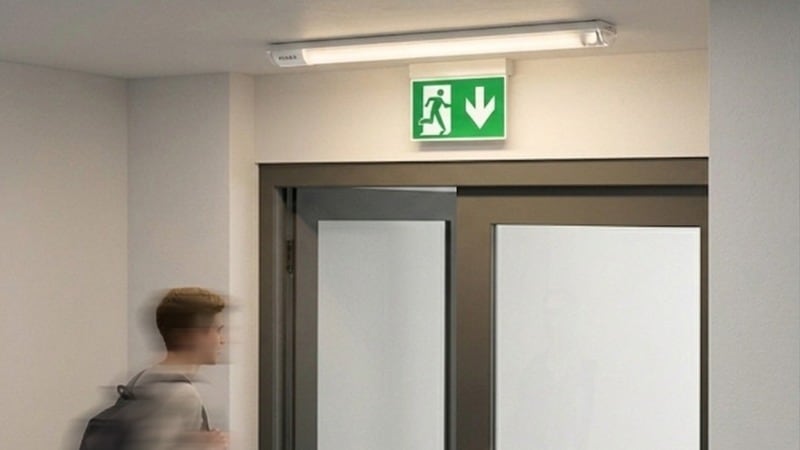
Clear, reliable illumination of escape routes can help people move towards safety. For businesses, that means emergency lighting should be considered alongside the wider evacuation strategy, fire safety arrangements and the needs of the people who use a building. This is particularly important in large or complex premises, where hundreds of people may need to evacuate quickly.


  • Emergency lighting is a part of business resilience: There is also a broader business case. When an incident occurs, the ability to evacuate safely is the priority. But businesses also need to think about how effectively their buildings can respond to disruption and return to normal operation.
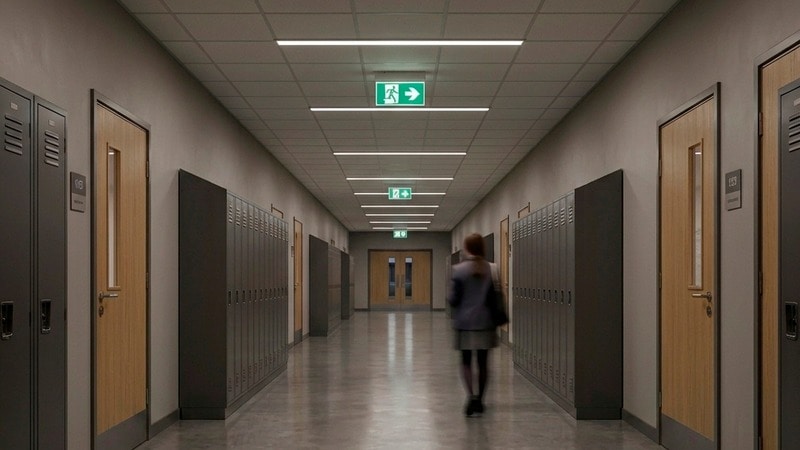
Getting it right


One of the biggest challenges with emergency lighting is that its value is only truly realised when occupants need it during an emergency evacuation.  That creates a difficult question for building owners and facilities teams: how confident are you that your emergency lighting system will perform when it is needed?


Regular testing and maintenance are essential, but traditional approaches can be time-consuming. Manual checks can also make it difficult to maintain a complete, up-to-date picture of the condition of emergency lighting across a large building or portfolio.


For facilities teams managing multiple sites, the challenge becomes even greater. A fault in one luminaire may be relatively easy to identify in a small building. Finding and resolving faults across a large estate can be considerably more complex. That’s where finding a solution that works for you is critical.

Classroom

Duration: Why It's Usually 3 Hours


Emergency luminaires must maintain the required illuminance for a rated duration after the mains fails. For most premises the standard rated duration is 3 hours. This covers the time needed to evacuate, allow the fire service to work, and importantly, let people safely re-enter or remain if the premises are of a type where evacuation may not be immediate, such as sleeping accommodation.


A 1-hour duration is permitted only in limited circumstances typically where the premises are evacuated immediately on supply failure and not re-occupied until the system has recharged. In practice, specify 3-hour systems unless a fire risk assessment positively justifies otherwise. It avoids arguments at handover and is what most clients and inspectors expect.

Lecture hall

Designing to support the building lifecycle


The conversation around emergency lighting should start early, where possible at the design stage of the building. Electrical contractors, lighting designers, consultants, facilities teams and building owners all have a role to play in ensuring that emergency lighting is considered as part of the wider building strategy.


That means asking questions such as:


Has the emergency lighting strategy been informed by a thorough risk assessment?/ Will the system remain appropriate if the building layout or use changes?/ How straightforward will testing and maintenance be?/ Can the system provide building teams with useful information about its ongoing performance?/ Could connected technology reduce the administrative burden associated with managing a large estate?


These questions shift the focus from simply "Does this building have emergency lighting?" to "How robust is the solution when people need it most?"  a more focussed approach.

Options available for you


There are a range of emergency lighting solutions available to suit different buildings, applications and levels of complexity. These can range from integrated or standalone emergency luminaires and simple plug-and-play solutions, through to wireless systems that provide greater visibility and control over your emergency lighting installation.


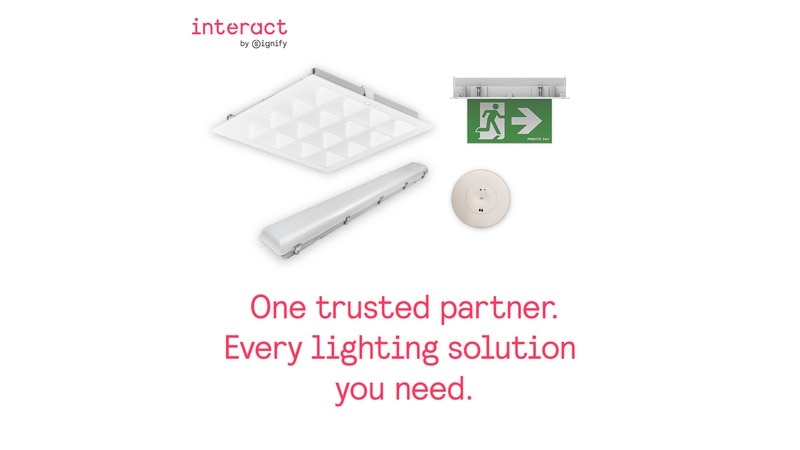
  • Emergency downlights – recessed or surface-mounted luminaires for general escape-route and open-area illumination. 
  • Emergency bulkheads – robust surface-mounted units suitable for a range of commercial and industrial environments. 
  • Emergency twin spots – two-headed luminaires providing directional emergency illumination. 
  • Emergency exit signs – illuminated signage to clearly identify escape routes and exits. 
  • Connected/wireless emergency lighting – emergency luminaires that can be monitored, tested and managed through a wireless system; Signify's wireless downlights, for example, are Interact-ready.


Choosing the approach between standard/ DALI or wireless may depend on various factors such as the age of the building i.e. is it a new build or a retrofit? How will emergency lighting be tested and maintained? Is there already a lighting management system? How large and complex is the building? Etc.

Lecture hall

Supporting the intelligent building


Digitalising building systems can provide greater visibility, helping facilities teams understand what is happening across their estate and act more quickly when intervention is required. Connected emergency lighting can therefore be part of a much bigger shift towards intelligent, data-enabled buildings. The objective is to use technology where it can make it easier to monitor, test and maintain a system that has a critical role in keeping people safe.


Why connected is the way forward


Connected lighting can transform how businesses manage their everyday lighting. Sensors, data and intelligent controls can help organisations understand how buildings are being used, reduce energy consumption and manage lighting more efficiently. The same principle can be applied to emergency lighting.

For example, Signify Interact can connect emergency lighting with a cloud-based management platform, giving building managers greater visibility of system status and testing.


The solution can automate emergency lighting function and duration tests, provide health-status information and generate reports to support documentation and compliance. Bringing general and emergency lighting into a single management environment can also help simplify maintenance and reduce the operational complexity of managing separate systems. It is about moving from a reactive approach. For facilities managers and electrical contractors, this can mean less time spent searching for faults and more information available to support maintenance decisions.


In conclusion


Emergency lighting has traditionally been something that sits quietly in the background: essential, but largely unnoticed. Perhaps that is exactly how it should be when everything is working normally.


As buildings become more connected and the expectations around safety, compliance, sustainability and operational efficiency continue to evolve, emergency lighting deserves a more prominent place in conversations about building performance.


The latest standards provide an important reminder that emergency lighting is not a one-off installation exercise. It requires appropriate design, verification, testing, maintenance and documentation throughout the building lifecycle. Ultimately, the measure of good emergency lighting is whether, when the unexpected happens, it is there, it works and it helps people get home safely. Emergency lighting should never be an afterthought. It should be considered an essential part of designing, operating and maintaining a resilient business.

About the author:

Clark Morrow

Clark Morrow


End User Marketeer, Signify UK&I

About Signify


Signify (Euronext: LIGHT) is the world leader in lighting for professionals and consumers and lighting for the Internet of Things. Our Philips products, Interact connected lighting systems and data-enabled services, deliver business value and transform life in homes, buildings and public spaces. In 2022, we had sales of EUR 7.5 billion, approximately 35,000 employees and a presence in over 70 countries. We unlock the extraordinary potential of light for brighter lives and a better world. We achieved carbon neutrality in our operations in 2020, have been in the Dow Jones Sustainability World Index since our IPO for six consecutive years and were named Industry Leader in 2017, 2018 and 2019. News from Signify is located at the Newsroom, Twitter, LinkedIn and Instagram. Information for investors can be found on the Investor Relations page.

Meydan Bridge

More blogs

  • Emergency Lighting: Why It’s a Real Business Asset

    October 28, 2026

    Emergency Lighting: Why It’s a Real Business Asset

  • Measuring the Value of Architectural Lighting Design

    September 10, 2026

    Measuring the Value of Architectural Lighting Design

  • GreenSpace Perfect Fit: The Future of Seamless Lighting Renovation

    June 21, 2026

    GreenSpace Perfect Fit: The Future of Seamless Lighting Renovation