Sustainability through precision manufacturing
Perfect fit also reflects a broader industrial transition: manufacturing only what is needed, when it is needed, rather than having to order a minimum quantity. The 3D printing approach aligns production directly with project specifications, producing the exact quantity needed and what more, the luminaire is easy to upgrade, with components that can be replaced without tools.
As part of Signify myCreation’s 3D printing approach, luminaires are produced on demand using high levels of recycled and bio-circular materials. This reduces excess inventory, minimises waste, and supports a more circular production model.
A step toward circular renovation practices
Renovation is one of the most resource-intensive activities in the built environment. Pprfect fit contributes to reducing that footprint in two ways:
- By extending the usable life of existing ceiling infrastructure through precise adaptation
- By reducing material waste through additive, on-demand manufacturing
Together, these changes point toward a more circular approach to building upgrades where renovation does not necessarily mean replacement, but intelligent adaptation.
Intelligence Integrated
The perfect fit comes with Integrated intelligence features, including daylight sensing, automatically adjust light output when sufficient natural light is available, reducing unnecessary energy consumption. Presence detection further enhances efficiency by dimming or switching off lights in unoccupied spaces. Because these smart functions are built directly into the system, there is no need for external sensors, helping to maintain clean ceiling aesthetics while simplifying installation. The result is instant energy savings, improved convenience, and a smarter approach to lighting control.
In action at El Dorado Airport
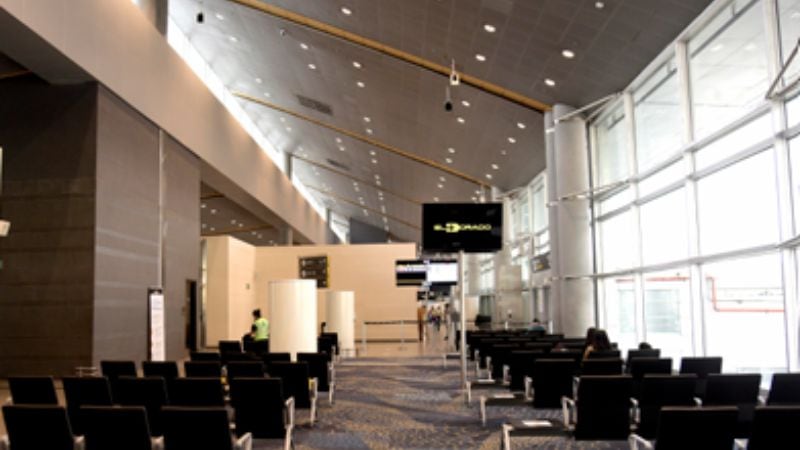
As part of their strategy against climate change, the International Airport Operator (OPAIN) was looking for a solution to mitigate the impact of their activities and reduce their carbon footprint. Their maintenance department, together with other areas of the airport, constantly adopt measures aimed at increasing the efficiency of the airport’s infrastructure, which covers an area of approximately 6.9 km². The main aim of their initiative was to retrofit interior luminaires whilst making sure lighting has the least possible negative impact.
Given that terminals are 24/7 transit points, the priority was to offer greater visual comfort for passengers and better workspaces for the entire airport workforce. For outdoor lighting, the challenge was to implement a cloud-based system that allowed them to manage operations and maintenance remotely with maximum reliability and safeguards. El Dorado is the first project of its kind in Latin America to implement the latest innovation in lighting both by using 3D printed luminaires and Interact City systems to remotely manage exterior lights.