Enter 3D printed lights: 3D printing is the opposite of ‘subtractive manufacturing’, which is the process of cutting out or hollowing out a piece of material. 3D printing lights enables manufacturers to produce complex shapes using less material than traditional manufacturing methods. It is believed that 3D printing can have a similar revolutionary impact on the lighting market as LED did. A large part of this impact is achieved by producing products more sustainably, making a strong case for sustainable business innovation.
3D printing is a highly flexible, more sustainable form of manufacturing, in which luminaires can be made with raw material that has already been recycled, tailored to the customer’s exact needs and recycled at the end of their life. In 3D printed luminaires, nearly every component may be reused or recycled – thanks to a consistent disassembly concept –supporting the concept of a circular economy, which means moving away from linear production and consumption models, where things are used for a short time and thrown away after use. At the end of the product’s lifecycle, the materials can be easily broken down, then simply shredded and recycled. What’s more, when compared with traditional luminaries, these innovative circular designs use no paint as the lamps are already pigmented, as well as fewer parts, and fewer screws. Moving to 3D printing can, arguably, help us accelerate the shift to an economy that reuses resources wherever possible, making them good for the environment and producing stock on demand, when needed.
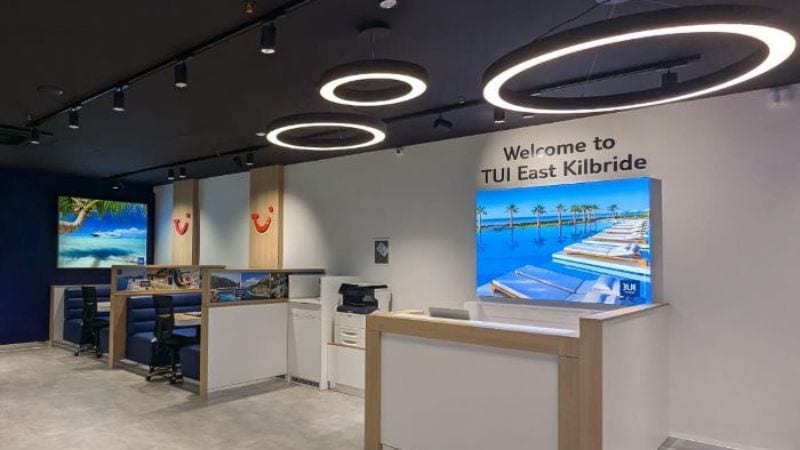
In the context of retail, 3D printed lights, as well as benefits relating to sustainability, can offer individualisation, can be tailored to add to the appeal of your store, whether that be the shape, colour or texture of the product. These lights allow co-creation and customisation, providing design freedom and brand identity. This flexibility and design freedom allows for an almost unlimited number of different luminaire shapes – an impossibility with traditional production methods. Another advantage is that of scalability. Retailers can order products at a minimum quantity of thousands of luminaires for deployment across various locations or just one luminaire, making this an even more attractive offer. For example, leading travel company TUI wanted to upgrade its in-store lighting and environmental impact was top of mind. 3D-printed lighting offered a circular solution, perfectly aligned with TUI’s sustainability agenda.